

SOMC Position Papers
SOMC Home | About SOMC | Members | Events | Papers
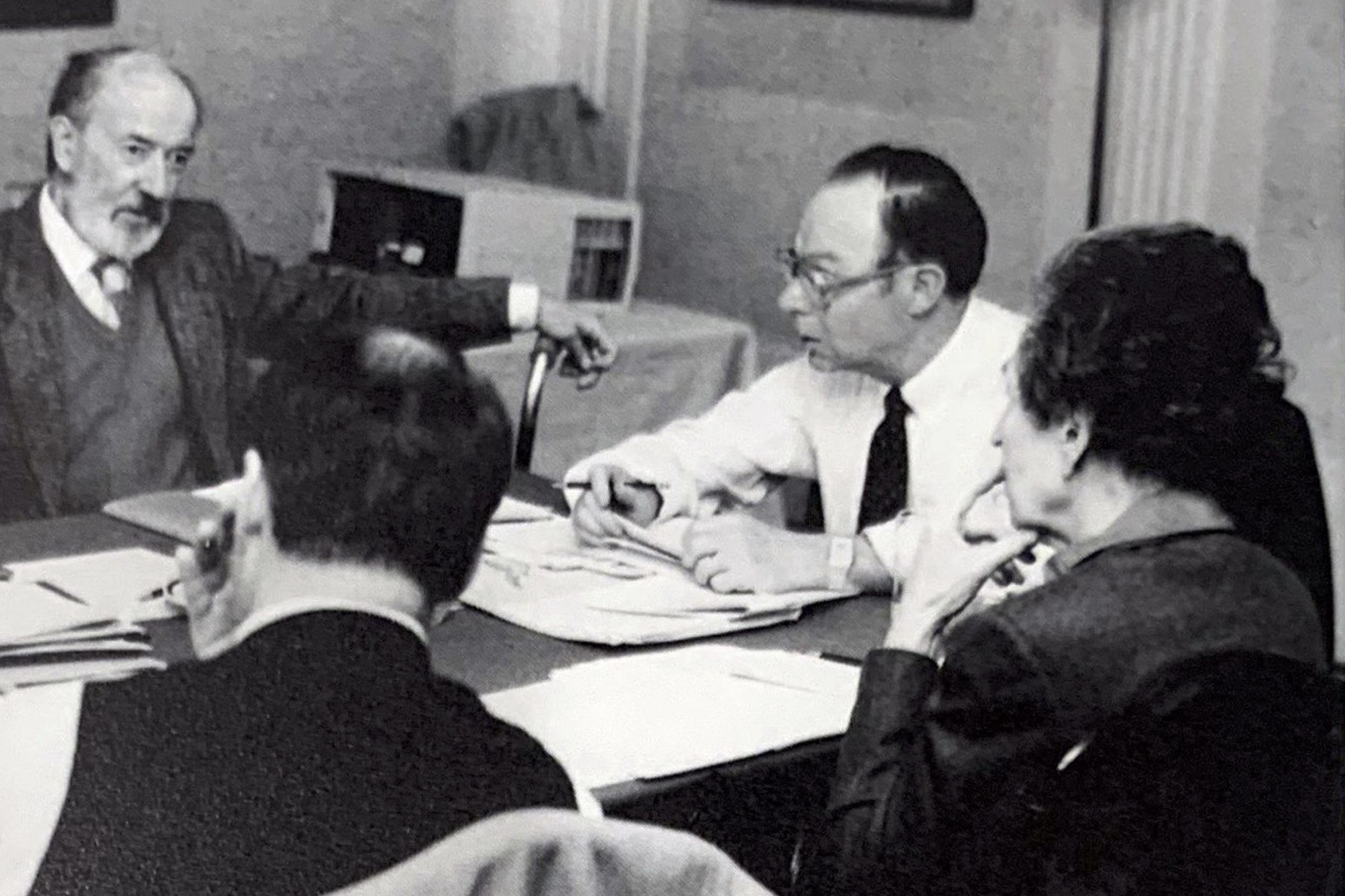 The Committee meets at least semi-annually. At each meeting, a number of papers are prepared by Committee members on a variety of macroeconomic and public policy topics pertaining to Federal Reserve and central bank monetary policy, regulatory policies, and finance.
November 7, 2025
Welcoming and Introductory Remarks: Shadow Open Market Committee at the Center for Financial Stability by Larry Goodman, Center for Financial Stability
The Robustness Properties of Nominal GDP Targeting by Peter N. Ireland, Boston College
Monetary Policy Responses to Shocks by Michael D. Bordo and Mickey D. Levy, [PAPER] [PPT]
Too Many Rules & Too Much Discretion? Simplifying Financial Regulation by Amit Seru, Stanford and Hoover Institution
The Persistent, Politically-Motivated Failures of Bank Regulation and Supervision by Charles W. Calomiris
Reprivatizing Fannie and Freddie: Getting a fair deal for taxpayers by Deborah Lucas, MIT
How Should We Think About Proposals to Change the Status of the Housing GSEs?, NYU, Stern
April 7, 2025
Welcome and Overview by Athanasios Orphanides, Massachusetts Institute of Technology and Charles Plosser, Former President, Federal Reserve Bank of Philadelphia
Slides for SOMC by Richard Clarida, Columbia University, PIMCO and Former Vice Chair, Board of Governors of the Federal Reserve System
The FOMC's Statement on Longer-Run Goals and Monetary Policy Strategy: A 2025 Checklist by Panelist: Gregory Hess, IES Abroad
Advice from William of Orange for the Federal Reserve’s Framework Review by Vincent Reinhart, Chief Economist & Macro Strategist, BNY Investments
Restoring Symmetry and Simplicity in the Fed's Strategic Framework by Mickey Levy, Hoover Institution and Charles I. Plosser, former President of the Federal Reserve Bank of Philadelphia
An Opportunity to Improve the Fed’s Strategic Framework by Mickey Levy, Hoover Institution and Charles I. Plosser, former President of the Federal Reserve Bank of Philadelphia
How Can the Fed Best Achieve Its goals Using Available Instruments? by David Romer, University of California, Berkeley
The Fed’s Policy Framework by Thomas Hoenig, Mercatus Center-George Mason University and Former President, Federal Reserve Bank of Kansas City, Former Vice Chair FDIC
Maximum Employment and the Federal Reserve's Monetary Policy Strategy by Jeff Lacker, Mercatus Center-George Mason University and Former President, Federal Reserve Bank of Richmond
How can the Fed best communicate its policy and strategy? by Donald Kohn, Brookings Institution and Former Vice Chair, Board of Governors of the Federal Reserve System
The Federal Reserve Should Welcome External Reviews by Andrew Levin, Dartmouth College
October 13, 2024
The 50-Year History of the SOMC and the Evolution of Monetary Policy by Michael Bordo, Hoover Institution and Rutgers University, and Mickey Levy, Hoover Institution ( Slides )
Comments on “The 50-Year History of the SOMC and the Evolution of Monetary Policy” by Michael Bordo and Mickey Levy by David Wheelock, Federal Reserve Bank of St. Louis ( Slides)
The Evolution of Monetary Policy: Critical Issues That Have Shaped Monetary Policy and the SOMC Over 50 Years: Discussion by George Tavlas, Bank of Greece ( Slides )
The Genesis and Performance of Swiss Monetary Targeting by Georg Rich, former director of the Swiss National Bank ( Slides )
Slides: Central Bank Watch 2024/2025: - Monetary Policy Normalisation Ahead by Axel Weber, former president of the Deutsche Bundesbank
Slides: Panel on 'Influences of the SOMC and monetarism in Europe and the UK' - Remarks by C.A.E. Goodhart by Charles Goodhart, former special advisor to the Bank of England
Bundesbank and ECB – Monetarist strategies? by Otmar Issing, former chief economist of the Deutsche Bundesbank and the European Central Bank
Money in the Search for a Nominal Anchor by Peter Ireland, Boston College ( Slides)
The Nominal Anchor, In Originali, and the Fed by Gregory Hess, IES Abroad ( Slides)
In Search of a Stable Nominal Anchor by Robert Hetzel, George Mason University and formerly Federal Reserve Bank of Richmond
Slides: The Federal Reserve’s Evolving Interpretation and Implementation of Its Mandate by Athanasios Orphanides, Massachusetts Institute of Technology
The Fed's Ample Reserves Monetary Policy Operating Framework: It Isn’t as Simple as It Looks by Loretta Mester, University of Pennsylvania and former president of the Federal Reserve Bank of Cleveland ( Slides )
From the Floor Back to the Corridor: Why the Choice of Monetary Policy Implementation Framework Matters by William Nelson, Bank Policy Institute, formerly Board of Governors of the Federal Reserve System ( Slides )
Slides: USD rate corridors depend on dealer balance-sheet capacity by Darrell Duffie, Graduate School of Business, Stanford University
Slides: Monetary-Fiscal Interactions by John Cochrane, Hoover Institution
Slides: When Are Central Bank Policy Actions Fiscal? Definitions, Examples and a Call for Transparency by Deborah Lucas, Massachusetts Institute of Technology
Slides: Lessons from Optimal Fiscal and Monetary Policy by Patrick Kehoe, Stanford University
From the "Lender of Last Resort" to "Too Big to Fail" to "Financial System Savior": Federal Reserve Credit Policy and the Shadow Open Market Committee by Jeffrey Lacker, George Mason University and former president, Federal Reserve Bank of Richmond ( Slides )
Slides: From the “Lender of Last Resort” to “Too Big to Fail” to “Financial System Savior”: Federal Reserve Credit Policy and the Shadow Open Market Committee by Jeffrey M. Lacker by Amit Seru, Hoover Institution and Stanford University
Slides: Should We Focus on Money or Credit When Crafting LOLR and Bailouts? by Charles Calomiris, professor emeritus, Columbia University
The Shadow Open Market Committee and Its Role in Monetary Policy Some Personal Observations by Robert Heller, former governor, Board of Governors of the Federal Reserve System ( Slides )
April 5, 2024
Basel III Endgame and Bank Capital Requirements by Deborah Lucas, MIT [PAPER] [PPT]
What is a Bank? What is a Government? by Charles Calomiris, Columbia University
Enhancing Resilience With Natural Growth Targeting by Athanasios Orphanides, MIT
Update on Monetary Conditions: Spring 2024 by Peter Ireland, Boston College [PAPER] [PPT]
Diversity of Views at the Federal Reserve by Andrew Levin, Dartmouth University
October 20, 2023
Duration Gap Disclosure: A Modest Proposal to Prevent Another SVB by Edward L. Golding and Deborah J. Lucas, MIT
Monetary Aggregates Still Matter by Michael D. Bordo, Rutgers University, NBER and the Hoover Institution
Has the Fed Escaped the Forward Guidance Trap? by Athanasios Orphanides, MIT
US Monetary Policy, 2020-23: Putting the Quantity Theory to the Test by Peter N. Ireland, Boston College
April 21, 2023
Fed Rate Increases From Behind the Curve: Financial Stresses Current and Historical by Mickey Levy, Berenberg Capital Markets and Michael Bordo, Rutgers University
COVID Credit Policies Around the World: Size, Scope, Costs and Consequences by Deborah Lucas, MIT and Gee Hee Hong, IMF
Fiscal Dominance and the Return of Zero-Interest Bank Reserve Requirements by Charles Calomiris, Columbia University
Some Questions About the Fed’s Monetary Policy Operating Regime by Jeffrey Lacker, former President and CEO, Federal Reserve Bank of Richmond
Reading the Macroeconomic Tea Leaves: Seismic Policy Changes and the Need for New Narrative by Deborah Lucas, MIT
November 11, 2022
The Evolution of Central Banks by Michael D. Bordo, Rutgers University
The Fed’s New Old Clothes by Gregory D. Hess, IES Abroad
The Fed Should Talk About the Prescriptions of Systematic Policy Rules by Jeffrey M. Lacker, former President and CEO, Federal Reserve Bank of Richmond and Charles Plosser, former President and CEO, Federal Reserve Bank of Philadelphia
April 29, 2022
The Continuing Case for Nominal GDP Level Targeting by Peter N. Ireland, Boston College
February 11, 2022
The Fed’s Delayed Exits from Monetary Ease: The Fed Rarely Learns from History by Michael D. Bordo, Rutgers University and Mickey D. Levy, Berenberg Capital Markets
Accelerating OER and Services Prices to Keep Inflation High by Mickey D. Levy, Berenberg Capital Markets
Inflation Risks and Monetary Policy by Andrew Levin, Dartmouth College
The Institutional Devolution of Government Financial Policy by Charles W. Calomiris, Columbia Business School
October 1, 2021
Opening Remarks: The Cleveland Fed and Inflation by Michael Bordo, Rutgers University and Hoover Institution
“Substantial Progress,” Transitory vs Persistent, and the Appropriate Calibration of Monetary Policy by Peter N. Ireland, Boston College and Mickey D. Levy, Berenberg Capital Markets
April 14, 2021
The Federal Reserve’s New Framework and Outcome-Based Forward Guidance by Richard Clarida, Vice Chair, Board of Governors of the Federal Reserve System
The Anguish and Progress of Central Banking by Gregory Hess, IES Abroad
Do Enlarged Deficits Cause Inflation: The Historic Record by Michael Bordo, Rutgers University and Mickey Levy, Berenberg Capital Markets
January 7, 2021
Labor Market Conditions and the Fed’s New Strategic Framework by Mickey D. Levy, Berenberg Capital Markets
Assessing the Magnitude of Shortfalls from Full Employment by Andrew Levin, Dartmouth College
September 30, 2020 – New York, NY
The Economic Impact of the Fed’s Corporate Bond Programs in Mitigating the Covid-19 Pandemic by Michael Bordo, Rutgers University and Hoover Institution
Strengthening the Federal Reserve’s Governance by Andrew Levin, Dartmouth College
End Interest on Bank Reserves by Peter Ireland, Boston College
The Murky Future of Monetary Policy by Mickey D. Levy, Berenberg Capital Markets and Charles Plosser, Hoover Institution, Stanford University; former President and CEO of the Federal Reserve Bank of Philadelphia
Why the Fed Should Issue a Policy Framework for Credit Policy by Kathryn Judge, Harvey J. Goldschmid Professor of Law, Columbia Law School
March 6, 2020 – New York, NY
Opening Remarks by Mickey Levy, Berenberg Capital Markets, LLC
SOMC Panel Communication and Transparency by Gregory D. Hess, Wabash College
Monetary Policy Rules: SOMC History and a Recent Case Study by Peter N. Ireland, Boston College
Fed Communications As a Risk Indicator by Charles W. Calomiris, Columbia University
Hope for the Best, Prepare for the Worst: The Federal Reserve’s Monetary Toolbox for Mitigating Severe Adverse Shocks by Andrew Levin, Dartmouth College
A Professor’s Tribute to a Prize Student by William Poole, Mises Institute & former President, Federal Reserve Bank of St. Louis
Panel on Federal Reserve transparency at a Shadow Open Market Committee conference honoring Marvin Goodfriend by Donald Kohn, The Brookings Institution and former Vice Chairman of the Federal Reserve Board
September 27, 2019 – New York, NY
Tariffs and Monetary Policy: A Toxic Mix by Michael D. Bordo, Rutgers University and Mickey D. Levy, Berenberg Capital Markets
How To Promote Fed Independence: Perspectives from Political Economy and History by Charles W. Calomiris, Columbia University
Some Heretical Thoughts on Central Bank Independence by Deborah Lucas, MIT
Assessing the Federal Reserve’s Toolbox for Providing Monetary Stimulus at the Effective Lower Bound by Andrew Levin, Dartmouth College
Introduction to “Characteristics of the Fed’s Independence and Accountability” by Gregory Hess, Wabash College
Limits to Monetary Policy and Fed Independence by Charles I. Plosser, Hoover Institution
March 29, 2019 – New York, NY
Some Practical Considerations for Monetary Policy Frameworks by Randal K. Quarles, Vice Chairman For Supervision, Board Of Governors Of The Federal Reserve System
Balance Sheet: Exposures, Risks, and Financial Difficulties by Charles Plosser, Hoover Institution
Monetary Policy Implementation: Making Better and More Consistent Use of the Federal Reserve’s Balance Sheet by Peter N. Ireland, Boston College
Flexible Rules Versus Discretion: The Fed’s “New” Data-Dependent Approach by Michael D. Bordo, Rutgers University
Truth from Lies: Why Natural Language Processing Will Revolutionize Central Bank Accountability and Encourage Systematic Monetary Policy by Charles W. Calomiris and Harry Mamaysky
The Fed’s Communications: Suggestions for Improvement by Mickey D. Levy, Berenberg Capital Markets
October 19, 2018 – New York, NY
Hawks and Doves at the Federal Reserve by Michael D. Bordo, Rutgers University
Economic Conditions and Policy Strategies: A Monetarist View by Peter N. Ireland, Boston College
Fannie Mae and Freddie Mac—Re-Loaded by Gregory D. Hess, Wabash College
The Financial Crisis Bailouts: What They Cost Taxpayers Who Reaped the Direct Benefits by Deborah Lucas, MIT
March 9, 2018 – New York, NY
Some Practical Considerations for Monetary Policy Frameworks by Charles Evans, President, Federal Reserve Bank of Chicago
Central Bank Digital Currency: The Future Direction for Monetary Policy by Michael D. Bordo, Rutgers University
The Fed’s Economic Forecasts, Uncertainties and Monetary Policy by Mickey D. Levy, Berenberg Capital Markets
Interest on Reserves: History and Rationale, Complications and Risks by Peter N. Ireland, Boston College
U.S. Monetary Instability and the Global Consequences of Unfettered Discretion by Charles W. Calomiris, Columbia Business School
Monetary Policy Normalization Should Be More Systematic and Less Wobbly by Gregory D. Hess, Wabash College and Athanasios Orphanides, MIT
September 15, 2017 – New York, NY
Fiscal Consequences of the Federal Reserve’s Balance Sheet by Deborah Lucas, Massachusetts Institute of Technology
A Monetarist View of Policy Renormalization by Peter Ireland, Boston College
The Fed and the Shortfall of Inflation by Mickey D. Levy, Berenberg Capital Markets
Some Thoughts on Allan Meltzer by Gregory D. Hess, Wabash College
Reforming and Depoliticizing the Federal Reserve by Charles W. Calomiris, Columbia Business School
An Historical Perspective on Financial Stability and Monetary Policy Regimes: A Case for Caution in Central Banks Current Obsession with Financial Stability by Michael D. Bordo, Rutgers University
May 5, 2017 – New York, NY
Preparing for the Next Storm: Reassessing Frameworks & Strategies in a Low R-Star World by John Williams, President, Federal Reserve Bank of San Francisco
The Fed Needs a Credible Commitment to Price Stability by Marvin Goodfriend, Carnegie Mellon University
The Case Against the Case Against Monetary Rules by Athanasios Orphanides, Massachusetts Institute of Technology
A Strategy for Normalizing Monetary Policy by Peter Ireland, Boston College & Mickey Levy, Berenberg Capital Markets
Are We Asking the Right Questions? by Gregory Hess, Wabash College
Reforming the Rules that Govern the Fed by Charles Calomiris, Columbia University
Valuing the GSEs’ Government Support by Deborah Lucas, Massachusetts Institute of Technology
October 7, 2016 – New York, NY
Acknowledging Uncertainty by Loretta Mester, President, Federal Reserve Bank of Cleveland
The Case (In Brief) for Unencumbering Interest Rate Policy at the Zero Bound by Marvin Goodfriend, Carnegie Mellon University
The Microeconomic Perils of Monetary Policy Experiments by Charles Calomiris, Columbia University
Could the Fed Do More to Please the Public? by Peter Ireland, Boston College
Why Have the Fed’s Polices Failed to Stimulate the Economy? by Mickey D. Levy, Berenberg Capital Markets
April 29, 2016 – New York, NY
What’s the matter with the Fed? by Peter R. Fisher, Tuck School of Business at Dartmouth
Rules Based Policies: Better Than International Central Bank Coordination and Cooperation by Michael D. Bordo, Rutgers University and Hoover Institution, Stanford University
Communist Party Rule and China’s Macroeconomics Adjustment Problem by Marvin Goodfriend, Carnegie Mellon University
There is a joke in academia and it goes like this by Gregory D. Hess, Wabash College
Why Has Nominal Income Growth Been So Slow? by Peter N. Ireland, Boston College
Rethinking Fed Policy amid Constraints on Aggregate Supply by Mickey D. Levy, Berenberg Capital Markets, LLC for the Americas and Asia
Reflections on Keynes and Hamilton by Bennett T. McCallum, Tepper School of Business
The Fed-ECB Policy Divergence by Athanasios Orphanides, MIT
October 2, 2015 – New York, NY
Monetary Policy: Transparency and Clarity Require a Strategy by Mickey D. Levy, Blenheim Capital Management
Monetary Policy Lessons from the 1990s for Today by Marvin Goodfriend, Carnegie Mellon University
Short-Sighted Monetary Policy and Fear of Liftoff by Athanasios Orphanides, MIT
March 20, 2015 – New York, NY
U.S. Inflation Is Not Too Low by Michael D. Bordo, Rutgers University and Hoover Institution Stanford University
Guidelines for Policymaking and Communication During Normalization by Charles W. Calomiris, Columbia University, Peter Ireland, Boston College, and Mickey Levy, Blenheim Capital Management
The Fed Should Fix the Interest on Reserves Floor by Marvin Goodfriend, Carnegie Mellon University
Economic Performance: Sound Cyclically but Longer—Run Concerns by Mickey D. Levy, Blenheim Capital Management
Remarks on John Taylor’s Contributions by Bennett T. McCallum, Carnegie Mellon University
November 3, 2014 – New York, NY
Federal Reserve Credibility and Reputation in Historical Perspective by Michael D. Bordo, Rutgers University
Phony Deflation Worries by Charles W. Calomiris, Columbia University
Monetary Policy as a Carry Trade by Marvin Goodfriend, Carnegie Mellon University
Can We Trust the Fed? by Gregory D. Hess, Wabash College
The Classical Theory of Inflation and Its Uses Today by Peter Ireland, Boston College
Rate Hike Fears are Unwarranted by Mickey D. Levy, Blenheim Capital Management
Bitcoin Issues by Bennett T. McCallum, Carnegie Mellon University
European Headwind: ECB Policy and Fed Normalization by Athanasios Orphanides, MIT
March 14, 2014 – New York, NY
Reforming the Rules That Govern the Fed by Charles W. Calomiris, Columbia Business School
The Relevance of Federal Reserve Surplus Capital for Current Policy by Marvin Goodfriend, Carnegie Mellon University and National Bureau of Economic Research
Shifting Perspectives on the Dual Mandate by Peter Ireland, Boston College
Achieving Normalcy in Monetary Policy by Mickey D. Levy, Blenheim Capital Management
Has the Federal Reserve Learned to be an Effective Lender of Last Resort in its First One Hundred Years? by Michael D. Bordo, Rutgers University and Hoover Institution
Recent Monetary Policy and the Fiscal Theory of the Price Level by Bennett T. McCallum, Carnegie Mellon University
September 20, 2013 – New York, NY
Reducing the Risks of the New Macro-Prudential Policy Regime by Charles W. Calomiris, Columbia Business School
The Chair’s Succession and the Fed’s Future by Marvin Goodfriend, Carnegie Mellon University and National Bureau of Economic Research
Is the Fed’s Exit on Track? Assessing the Indicators by Peter Ireland, Boston College
Reconciling FOMC Forecasts and Forward Guidance by Mickey D. Levy, Blenheim Capital Management
The Recovery of Housing and the End of the Slow Recovery? by Michael D. Bordo, Rutgers University and Hoover Institution
Nominal GDP Targeting: Policy Rule or Ad-Hoc Splurge? Bennett T. McCallum, Carnegie Mellon University
November 20, 2012 – New York, NY
The Unlikely Return to “Normalcy” in U.S. Monetary Policy by Charles Calomiris, Columbia University Graduate School of Business
The Fed Should Put Its 2% Inflation Goal to Work by Marvin Goodfriend, Carnegie Mellon University
Political Troubles Forecast for the Fed by Gregory Hess, Claremont McKenna College
Refocusing the Fed by Peter Ireland, Boston College
Monetary Policy: Little Economic Impact, High Risks by Mickey Levy, Bank of America
Expansionary Monetary Policy Can Create Asset Price Booms by Michael D. Bordo, Rutgers University and Hoover Institution, Stanford University
April 20, 2012 – New York, NY
A Fed Scorecard for the Last Decade by Charles Calomiris, Columbia University Graduate School of Business
Securing the Promise of Price Stability by Marvin Goodfriend, Carnegie Mellon University
What’s Next for Monetary Policy by Gregory Hess, Claremont McKenna College
Innovations to Federal Reserve Policy: Opportunities Seized and Opportunities Lost by Peter Ireland, Boston College
The Fed’s Monetary Policy: Limitations and Concerns by Mickey Levy, Bank of America
October 21, 2011 – New York, NY
The Risks of Financial Turmoil for Monetary Policy: Some Lessons from History by Michael Bordo, Rutgers University
Bank Capital Requirement Reform: Long-Term Size and Structure, the Transition, and Cycles by Charles Calomiris (Columbia University)
Fiscal Dimensions of Inflationist Monetary Policy by Marvin Goodfriend, Carnegie Mellon University
What the Political System Can Do to Help the Fed by Peter Ireland, Boston College
Monetary Policy and Economic Performance by Mickey Levy, Bank of America
Nominal GDP Targeting by Bennett McCallum, Carnegie Mellon University
March 25, 2011 – New York, NY
The Prospects for Inflation Ahead by Michael Bordo, Rutgers University
Congressional Oversight of the Federal Reserve by Marvin Goodfriend, Carnegie Mellon University
The Dueling Mandate by Gregory Hess, Claremont McKenna College
Evaluating QEII: A Rationale to Exit by Mickey Levy, Bank of America
Monetary Standards and the US Constitution by Bennett McCallum, Carnegie Mellon University
Monetary Policy and the Behavior of Banks: Lessons from the 1930s for the 2010s by Charles Calomiris (Columbia University)
Are Delays to the Foreclosure Process a Good Thing? by Charles Calomiris (Columbia University) and Eric Higgins
October 12, 2010 – New York, NY
Guidelines for Global Economic Policymaking by Gregory Hess, Claremont McKenna College
Managing Monetary Policy at the Zero Interest Rate Bound by Marvin Goodfriend, Carnegie Mellon University and National Bureau of Economic Research
Targets for Monetary Policy: Inflation, Exchange Rates, and Others by Bennett McCallum, Carnegie Mellon University
A Three-Part Program for Housing Finance Reform by Charles Calomiris, Columbia University
Appropriate Roles of Monetary and Fiscal Policies by Mickey Levy, Bank of America
Does the Euro Need a Fiscal Union? by Michael Bordo, Rutgers University
Beyond Basel and the Dodd-Frank Bill by Charles Calomiris, Columbia University
March 26, 2010 – New York, NY
An Ode to Independence by Governor Kevin Warsh, Federal Reserve
Monetary Policy 1.0 by Gregory Hess, Claremont McKenna College
Clarifying Central Bank Responsibilities for Monetary Policy, Credit Policy, and Financial Stability by Marvin Goodfriend, Carnegie Mellon University and National Bureau of Economic Research
The Rationale for Independent Monetary Policy by Bennett McCallum, Carnegie Mellon University
The Federal Reserve: Independence Gained, Independence Lost…. by Michael Bordo, Rutgers University
Restoring Monetary Policy Independence: The Risks of Regulatory Reform by Charles Calomiris, Columbia University
Monetary Policy Independence Amid Fiscal Policy Deterioration by Mickey Levy, Bank of America
April 24, 2009 – Washington, D.C.
The Great Contraction and the Current Crisis: Historical Parallels and Policy Lessons by Michael Bordo, Rutgers University
The Allocation of Regulatory Authority by Charles Calomiris, Columbia University
Prudential Bank Regulation: What’s Broke and How To Fix It by Charles Calomiris, Columbia University
We Need an “Accord” for Federal Reserve Credit Policy by Marvin Goodfriend, Carnegie Mellon University
What’s in Worse Shape, the Economy or Fiscal Policy? by Mickey Levy, Bank of America
China, the US Dollar and SDRs by Bennett McCallum, Carnegie Mellon University
Boundaries Between the Fed and the Treasury by Anna Schwartz, NBER
Monetary Policy in Color by Gregory Hess, Claremont McKenna College
September 30, 2009 – Washington, D.C.
Panelists
Donald Kohn, Vice Chairman, Federal Reserve Board, Panel Remarks
Athanasios Orphanides, Governor, Central Bank of Cyprus, and Member of the Governing Council of the European Central Bank, Panel Remarks
Exit Policies from the Financial Crisis—To What? by William Poole, Cato Institute
The Fed’s Monetary Policy during the 1930s: A Critical Evaluation by Michael Bordo, Rutgers University
Reassessing the Role of the Fed: Grappling with the Dual Mandate and More? by Charles Calomiris, Columbia University
Exiting Credit Policy to Preserve Sound Monetary Policy by Marvin Goodfriend and Bennett McCallum, Carnegie Mellon University
Fannie and Freddie: The Houseguests that Just Won’t Leave by Gregory Hess, Claremont McKenna College
Macroeconomic Policies and the Economy by Mickey Levy, Bank of America
May 7-8, 2006 – Washington, D.C.
Inflation is Like a Cancer, Not Like a Cold by Gregory Hess, Claremont McKenna College
Monetary Policy and Maintaining Low Inflation by Mickey Levy, Bank of America
Policy-Rule Retrospective on the Greenspan Era by Bennett McCallum, Carnegie Mellon University
Chairman Bernanke Should Review the Roster of the Fed’s Non-Monetary Policy Activities: Are They a Distraction or Useful for the Conduct of Monetary Policy? by Anna Schwartz, NBER
May 1-2, 2005 – Washington, D.C.
Look Who’s Talking Now! by Gregory Hess, Claremont McKenna College
Monetary Policy AG by Lee Hoskins
Solid Fundamentals and a Temporary Upward Drift in Inflation by Mickey Levy, Bank of America
How Should the Fed Respond to Large Fiscal Deficits? by Bennett McCallum, Carnegie Mellon University
What To Do About the Dollar by Anna Schwartz, NPER
How I Learned to Stop Worrying and Love the Current Account Deficit by Alan Stockman
December 4-5, 2005 – Washington, D.C.
Petronomics and the Fed be Gregory Hess, Claremont McKenna College
Zero Inflation: Goal and Target by Lee Hoskins
Remarks on the President’s Advisory Panel on Tax Reform by Mickey Levy, Bank of America
Is Singapore the Model for China’s New Exchange Rate Policy? by Bennett McCallum, Carnegie Mellon University
Will There Be A Global Trade Pact to Reduce Tariffs, Quotas, Subsidies, and Trade Barriers That Limit Access of Agricultural Products of Less Developed Countries to Developed Country Markets? by Anna Schwartz, NBER
May 2-3, 2004 – Washington, D.C.
Inflation Trends and the Federal Reserve – (Charts) by Mickey Levy, Bank of America
Communicating Monetary Policy by Lee Hoskins
China’s Exchange Rate and Monetary Policy by Bennett T. McCallum, Carnegie Mellon University
Dollar Depreciation Will Not Contribute to U.S. Inflation by Alan Stockman
Can We Avert the Next Financial Crisis by Gregory D. Hess, Claremont McKenna College
November 14-15, 2004 – Washington, D.C.
Federal Budget Realities and the Need for Policy Reform by Mickey Levy, Bank of America
Policy Recommendations: Privatize the IMF and World Bank by Lee Hoskins
The 2004 Nobel Prize in Economics by Bennett T. McCallum, Carnegie Mellon University
Fixing Social Security and Medicare: The Top Priority Domestic Policy by Alan Stockman
Oil, Oil, Toil and Trouble? by Gregory D. Hess, Claremont McKenna College
Regulatory Lapses in Monitoring Anti-Money Laundering Performance by Financial Institutions by Anna Schwartz, NBER
May 18-19, 2003 – Washington, D.C.
An Assessment of Economic Performance and Policymaking and Charts by Mickey Levy, Bank of America
Inflation Targeting for the United States by Bennett McCallum, Carnegie Mellon University
Flat Money and Deflation by Anna Schwartz, NBER
Guns and Butter? by Gregory Hess, Claremont McKenna College
November 9-10, 2003 – Washington, D.C.
It’s Time to Privatize Fannie Mae and Freddie Mac by Gregory Hess, Claremont McKenna College
Property Rights in Iraq by Lee Hoskins
Weak Labor Markets: Soft GDP Rebound or Structural Phenomenon? by Mickey Levy, Bank of America
Misconceptions Regarding Rules vs. Discretion for Monetary Policy by Bennett McCallum, Carnegie Mellon University
Deflating Fears of Deflation by Charles Plosser
Government Spending, Deficits and Optimal Financial Policy by Charles Plosser
Interpreting the U.S. Current Account Deficit by Anna Schwartz, NBER
April 14-15, 2002 – Washington, D.C.
No One Left To Cry To* by Gregory Hess, Claremont McKenna College
Fed Governance by Lee Hoskins
Healthy Economic Recovery and Rising Real Interest Rates by Mickey Levy, Bank of America
The Wall Street Journal Position on Exchange Rates by Bennett McCallum, Carnegie Mellon University
Monetary Policy Coming Out of Recession by Anna Schwartz, NBER
Government and Corporate Governance in a Free Society by Alan Stockman
November 17-18, 2002 – Washington, D.C.
Assessing the Economic Recovery and Charts by Mickey Levy, Bank of America
The Use of Policy Rules in Monetary Policy Analysis by Bennett McCallum, Carnegie Mellon University
Will the U.S. Economy Catch the Japanese Disease? by Alan Stockman
Questions Concerning Argentina, Brazil, and the IMF by Anna Schwartz, NBER
Is It Time for Fannie Mae and Freddie Mac to Cut the Cord? by Gregory Hess, Claremont McKenna College
April 29-30, 2001 – Washington, D.C.
The Uneven Economic Slump & Charts by Mickey Levy, Bank of America
Implications of the Treasury Debt Paydown for Federal Reserve Open Market Operations by Anna Schwartz, NBER
A Tale of Two Press Releases by Gregory Hess, Claremont McKenna College
The Case for a Tax Cut by Alan Stockman
Japanese Monetary Policy by Bennett McCallum, Carnegie Mellon University
Comment on Monetary Policy by Lee Hoskins
October 14-15, 2001 – Washington, D.C.
Economic Performance and Policy Following the Terrorist Attacks & Charts by Mickey Levy, Bank of America
The I.M.F. Infirmary by Anna Schwartz, NBER
Defending the Goal by Gregory Hess, Claremont McKenna College
The Only Real Solution to the Social Security Problem by Alan Stockman
Japanese Monetary Policy Again by Bennett McCallum, Carnegie Mellon University
Property Rights and Wealth by Lee Hoskins
Crisis and Economic Policy by Lee Hoskins
November 12-13, 2000 – Washington, D.C.
Economic and Financial Performance & Charts by Mickey Levy, Bank of America
Budget Surpluses and the End of Fiscal Restraint by Mickey Levy, Bank of America
Oil and the Macroeconomy by Gregory Hess, Claremont McKenna College
Learning the Right Lessons from the Current Account Deficit and Dollar Appreciation by Alan Stockman
The U.S. Deserves a Monetary Standard by Bennett McCallum, Carnegie Mellon University
Monetary Policy: Credible Commitments by Lee Hoskins
The I.M.F. and Its Critics by Anna Schwartz, NBER
September 26-27, 1999 – Washington, D.C.
Economic Outlook: Moderating Growth With Modest Inflation Pressures by Mickey Levy, Bank of America
Does Wage Inflation Cause Price Inflation? by Gregory Hess, Claremont McKenna College
FOMC Bias by Lee Hoskins
Has the Productivity Boom Finally Arrived? by Charles Plosser
Prospects for International Currency Use of the Euro by Anna Schwartz, NBER
March 7-8, 1999 – Washington, D.C.
Medicare Reform by Gregory Hess, Claremont McKenna College
Social Security: Save or Kill? by Lee Hoskins
Budget Surpluses and the Fiscal Policy Debate by Mickey Levy, Bank of America
March 15-16, 1998 – Washington, D.C.
Maintaining Favorable Economic Performance by Mickey Levy, Bank of America
Perspective Budget Surplus by Lee Hoskins
Exaggerated Risks of Deflation by Charles Plosser
Asian Problems and the IMF by Allan Meltzer, Carnegie Mellon
A Note on Stable Velocity by Allan Meltzer, Carnegie Mellon
Contemporaneous Versus Lagged Reserve Requirements: Issue or Non-Issue for Monetary Policy by Robert Rasche
Economic Growth Robust as Imbalances Emerge by Mickey Levy, Bank of America
Japan-Still Unwilling to Take the Cure by Charles Plosser
Is There Still a Need for an International Lender of Last Resort? by Anna Schwartz, NBER
September 13-14, 1998 – Washington, D.C.
An Economic Perspective Amid Uncertainty by Mickey Levy, Bank of America
Monetary Policy, Stability, Disinflation and Economic Performance by Mickey Levy, Bank of America
Zero Inflation: Finish the Job by Lee Hoskins
Some Observations About International Trade and Global Interdependencies by Charles Plosser
What Future for the IMF? by Anna Schwartz, NBER
March 2, 1997 – Washington, D.C.
Click here to download all event materials in PDF
Notes on the Economy, by H. Erich Heinemann
Medicare Reform, by Lee Hoskins
Maintaining Healthy Economic Performance, by Mickey D. Levy, Bank of America
Social Security Reform, by Charles I. Plosser
The Boskin Commission Report, by William Poole
Recent Behavior of Various Monetary Aggregates, by Robert H. Rasche
September 9, 1996 – Washington, D.C.
Click here to download all event materials in PDF
Tight Money, by H. Erich Heinemann
A Favorable Outlook: Continued Economic Expansion and Low Inflation, by Mickey D.Levy, Bank of America
Economic and Financial Perspectives, by Mickey D. Levy, Bank of America
Indexed Bonds, by William Poole
Opportunistic Approach to Disinflation, by Robert H. Rasche
March 11, 1996 – Washington, D.C.
Click here to download all event materials in PDF
The Road to Recession, by H. Erich Heinemann
Balanced Budgets, Limited Government, and Economic Well-Being, by Lee Hoskins
Economic Conditions, by Mickey D. Levy, Bank of America
Unemployment, Gold, Money and Forecasts of Inflation, by Allan H.Meltzer
The Debt Ceiling, by William Poole
A Note on the Behavior of Interest Rate Spreads in Expansions and Near Cyclical Peaks in the U.S., by Robert H. Rasche
The Mexican Loan Repayment Sleight of Hand, by Anna J. Schwartz, NBER
March 6, 1995 – Washington, D.C.
Click here to download all event materials in PDF
Prospects for Money and the Economy, by H. Erich Heinemann
Mexico: Policy Failure, Moral Hazard, and Market Solutions, by Lee Hoskins
Tax Cuts and Tax Reform, by Mickey D. Levy, Bank of America
Economic Outlook, by Mickey D. Lev, Bank of America
The Balanced-Budget Amendment: Treating the Symptom but Not the Disease, by Charles I. Plosser
What Does the Phillips Curve Tell Us About the Outlook for Inflation?, by William Poole
Monetary Aggregates, by Robert H. Rasche
Trial and Error in Devising the Mexican Rescue Plan, by Anna J. Schwartz, NBER
September 9, 1995 – Washington, D.C.
Click here to download all event materials in PDF
Tight Money, Tight Budget, Profit Squeeze in Services, by H. Erich Heinemann
Heinemann Economics, Prospects for Money and the Economy, by H. Erich Heinemann
Some Observations on Monetary Policy, by Lee Hoskins
Positive Implications of Deficit Reduction and Fiscal Reform, by Mickey D. Lev, Bank of America
Soft-Landing Succeeds: Moderate Economic Growth and Improving Inflation Fundamentals, by Mickey D. Levy, Bank of America
The Dollar, by William Poole
How Useful and Reliable is the Unemployment Rate in Forecasting Inflation?, by Robert H. Rasche
G-7 Countries at Halifax Summit Repeat the Mexican Myth, by Anna J. Schwartz
September 11, 1994 – Washington, D.C.
Click here to download all event materials in PDF
The Cost of Go-Stop-Go, by H. Erich Heinemann
Budget Progress?, by Mickey D. Levy, Bank of America
Economic Outlook, by Mickey D. Levy, Bank of America
M2 and Base Growth, by Allan H. Meltzer, Carnegie Mellon University
A Note on Recent U.S. Productivity Growth, by William Poole
Recent Behavior of M2, by Robert H. Rasche
Myths in the Report of the Bretton Woods Commission, by Anna J. Schwartz, NBER
March 6, 1994 – Washington, D.C.
Click here to download all event materials in PDF
Why are Interest Rates Rising?, by H. Erich Heinemann
Regulatory Consolidation, by Lee Hoskins
Economic Outlook, by Mickey D. Levy, Bank of America
Trade Deficits with Japan, by Charles L Plosser
Understanding the Monetary Aggregates Today, by William Poole
Public Disclosure and FOMC Deliberations, by Robert H. Rasche
September 13, 1993 – Washington, D.C.
Click here to download all event materials in PDF
Observations on Trends in Employment, by H. Erich Heinemann
Prospects for Money and the Economy, by H. Erich Heinemann
Economic and Financial Update, by Mickey D. Levy, Bank of America
Projected Deficit Reduction But Not Fiscal Reform, by Mickey D. Levy, Bank of America
Growth of Base Money and Nominal GDP, by Allan H. Meltze, Carnegie Mellon University
The Real Rate of Interest as a Guide to Monetary Policy, by William Poole
March 8, 1993 – Washington, D.C.
Click here to download all event materials in PDF
The Uruguay Round and Free Trade Areas, by Jagdish Bhagwati
Federal Reserve Independence and Accountability, by W. Lee Hoskins
President Clinton’s Economic Package, by Mickey D. Levy, Bank of America
Economic Outlook, by Mickey D. Levy, Bank of America
Some Observations on Monetary Base Growth During Recoveries, by Charles I. Plosser
The Competitive Position of the United States in the International Economy, by William Poole
U.S. Foreign Exchange Market Intervention in 1992, by Anna J. Schwartz, NBER
March 8, 1992 – Washington, D.C.
Click here to download all event materials in PDF
Structural Shifts Amid a Cyclical Fluctuation: A Tricky Environment for Countercyclical Macroeconomic Policies, by Mickey D. Lev, Bank of America
Memo to the Shadow Open Market Committee, by H. Erich Heinemann
Where Do We Stand in the Battle Against Inflation?, by William Poole
Some Issues in the Interpretation of Recent Monetary Policies, by Robert H. Rasche
Foreign Exchange Market Intervention, by Anna J. Schwart, NBER
How to Help Russia, by Allan H. Meltzer, Carnegie Mellon University
September 13, 1992 – Washington, D.C.
Click here to download all event materials in PDF
NAFTA, by Jagdish Bhagwati
Memo to the Shadow Open Market Committee, by H. Erich Heinemann
Economic Outlook, by Mickey D. Levy, Bank of America
Comparing the Candidates’ Economic Platforms, by Mickey D. Levy, Bank of America
Long Term Economic Growth, by Charles I. Plosser
The Role of Inflation and Inflation Expectations in the Current Dismal Recovery, by William Poole
Monetary Aggregates and Monetary Policy, by Robert H. Rasche
September 29, 1991 – Washington, D.C.
Click here to download all event materials in PDF
Economic Outlook, by Jerry L. Jordan
The Economy in ’92, by H. Erich Heinemann
Fiscal Policy Lacks Direction and Credibility, by Mickey D. Levy, Bank of America
Recent Behavior of Monetary Aggregates, by Robert H. Rasche
Choosing a Monetary Aggregate: Another Look, by William Poole
Economic Policy Towards Russia and the Soviet Republics, by Charles I. Plosser
The Misuse of the Fed’s Discount Window, by Anna J. Schwartz, NBER
March 4, 1991 – Washington, D.C.
Click here to download all event materials in PDF
Economic Outlook, by Jerry L. Jordan
A Fiscal Update: It Can’t Get Much Worse Than This, by Mickey D. Levy, Bank of America
Heinemann Economic Research, by H. Erich Heinemann
The Treasury’s Proposals to Restructure the U.S. Banking System, by Anna J. Schwart, NBER
Modernization of the Financial System: Treasury Recommendations Related to Deposit Insurance, by Robert H. Rasche
Some Observations in Recent Changes in Reserve Requirements, by Robert H. Rasche
October 1, 1990 – Washington, D.C.
Click here to download all event materials for PDF
Economic Outlook, by Jerry L. Jordan
Financial Structure Reforms, by Jerry L. Jordan
Shadow Open Market Committee, by Jerry L. Jordan
Fiscal Backpeddling, by Mickey D. Levy, Bank of America
Heinemann Economic Research, by H. Erich Heinemann
Monetary Policy After OU Shock, by William Poole
Foreign Exchange Market Intervention, by Anna J. Schwartz
Recent Growth of the Monetary Aggregates, by Robert H. Rasche
March 19, 1990 – Washington, D.C.
Click here to download all event materials in PDF
The U.S. Economy in 1990/91, by Jerry L. Jordan
A Fiscal Policy Update, by Mickey D. Levy, Bank of America
Dismal Landscape, by H. Erich Heinemann
Foreign Exchange Market Intervention, by Anna J. Schwartz, NBER
The German Democratic Republic: Economic Goals, Constraints and Monetary Reform, by William Poole
September 17, 1989 – Washington, D.C.
Click here to download all event materials in PDF
Economic Outlook Through 1990 by Jerry L. Jordan
The U.S. Economy, by Jerry L. Jordan
A Federal Budget Update, by Mickey D. Levy
The Economic Outlook, by H. Erich Heinemann
P* Type Models: Evaluation and Forecasts, by Robert H. Rasche
U.S. Monetary Authorities’ Foreign Currency Purchases, by Anna J. Schwartz
Issues in Foreign Investment in the United States, by William Poole
March 20, 1989 – Washington, D.C.
Click here to download all event materials in PDF
Economic Outlook, by Jerry L. Jordan
Heinemann Economic Research Memorandum, by H. Erich Heinemann
The International Debt Problem, by Allan H. Meltzer
The Bush Administration’s Proposals to Rescue and Reform the S&L Industry, by Anna J. Schwartz
It’s Hard to Get Excited About the Budget Outlook, by Mickey D. Levy
Recent Monetary Policy Actions and Economic Activity, by Robert H. Rasche
Some Evidence on the Elusive 1982 Shift in Velocity Drift, by Robert H. Rasche
Coordination of Monetary and Fiscal Policy, by William Poole
September 19, 1988 – Washington, D.C.
Click here to download all event materials in PDF
Economic Outlook, by Jerry L. Jordan
The U.S. Economy, by Jerry L. Jordan
Refocusing Fiscal Priorities, by Mickey Levy
Recent Behavior of Monetary Base Velocity, by Robert H. Rasche
Official Intervention in the Foreign Exchange Markets, by William Poole
A “Failure” of Monetarism? by Karl Brunner
The Control of the Monetary Base and Its Purpose, by Karl Brunner
Tables, by Karl Brunner
March 13, 1988 – Washington, D.C.
Click here to download all event materials in PDF
Economic Outlook, by Jerry L. Jordan
The Economy and Fiscal Policy, by Jerry L. Jordan
Federal Budget Update — More of the Same, by Mickey D. Levy
Monetary Aggregates and Economic Activity, by Robert H. Rasche
U.S. International Capital Flows in the 1980s, by William Poole
September 14, 1987 – Washington, D.C.
Click here to download all event materials in PDF
The Federal Budget Tangle, by Mickey D. Levy, Fidelity Bank
Recent Behavior of Ml Velocity, by Robert H. Rasche, Michigan State University
Economic Outlook, by Jerry L. Jordan, First Interstate Bancorp
Monetary Policy and the Outlook, by Jerry L. Jordan, First Interstate Bancorp
Tables, by H. Erich Heinemann, Moseley Securities Corporation
March 9, 1987 – Washington, D.C.
Click here to download all event materials in PDF
Economic Outlook and Monetary Policy, by Jerry L. Jordan, First Interstate Bancorp
An Update on Velocity Behavior, by Robert H. Rasche, Michigan State University
Projected Progress on Deficit Reduction: Will It Prove Illusory (Again)? by Mickey D. Levy, Fidelity Bank
PoliPolicy Coordination and the Dollar, by Karl Brunner, University of Rochester
September 21, 1986 – Washington, D.C.
Click here to download all event materials in PDF
Economic Outlook, by Jerry L. Jordan, First Interstate Bancorp
Circumventing the Intent of Gramm-Rudman-Hoilings, by Mickey D. Levy, Fidelity Bank
Time Series Analysis of “Velocity” Concepts, by Robert Rasche, Michigan State University and Arizona State University
March 17, 1986 – Washington, D.C.
Click here to download all event materials in PDF
Economic Outlook, by Jerry L. Jordan, First Interstate Bancorp
Fiscal and Monetary Policy Overkills, by William Poole, Brown University
A Positive Trend in the Federal Budget Outlook, by Mickey D. Levy, Fidelity Bank
Multiplier Forecasts and the Velocities of Various M’s, by Robert H. Rasche, Michigan State University
External Debt and the Banking System, by Anna J. Schwartz, National Bureau of Economic Research, Inc.
Tables, by H. Erich Heinemann, Ladenburg, Thalmann & Co., Inc.
September 22, 1985 – Washington, D.C.
Click here to download all event materials in PDF
Economic Outlook, by Jerry L. Jordan, First Interstate Bancorp
The Money Markets, by William Poole, Brown University
Recent Budget Policy and Economic Impact, by Mickey D. Levy, Fidelity Bank
Where is the Mystery in the Behavior of the Monetary Aggregates? by Robert H. Rasche, Michigan State University
Update to the September, 1985 Shadow Open Market Committee Report: The Behavior of the Monetary Aggregates in August, 1985, or “The Grinch That Stole Christmas”, by Robert H. Rasche, Michigan State University
Commentary on Prospects For Money and the Economy, by H. Erich Heinemann, Ladenburg, Thalmann & Co., Inc.
March 24, 1985 – Washington, D.C.
Click here to download all event materials in PDF
Confusion of Language and the Politics of Uncertainty, by Karl Brunner, University of Rochester
Guidelines for Deficit Policy, by Mickey D. Levy, Fidelity Bank
Economic Outlook, by Jerry L. Jordan, First Interstate Bancorp
Forecasts of the Ml – Adjusted Monetary Base Multiplier for 1985, by Robert H. Rasche, Michigan State University
International Trade Policy: The Two Main Tasks, by Jan Tumlir, GATT, Switzerland
September 30, 1984 – Washington, D.C.
Click here to download all event materials in PDF
From the “Upper Tail Theory of Inflation” to the “Lower Tail Theory of Deflation”, by Karl Brunner, University of Rochester
Budget (In)Activity and No Deficit “Policy”, by Mickey D. Levy, Fidelity Bank
Monetary Policy and the Outlook—1984/85, by Jerry L. Jordan, University of New Mexico
Recent Behavior of the M. – Adjusted Monetary Base Multiplier and Forecasts for the Remainder of 1984, by Robert H. Rasche, Michigan State University
March 11, 1984 – Washington, D.C.
Click here to download all event materials in PDF
Deficits, Interest Rates and Monetary Policy, by Karl Brunner, University of Rochester
Base Velocity – The Trend Continues, by Allan H. Meltzer, Carnegie Mellon University
Trade Restrictions Imposed in 1983, by Jan Tumlir, University of California at Los Angeles
Monetary Policy Options and the Outlook — 1984, by Jerry L. Jordan, University of New Mexico
Economic Projections, by Burton Zwick, Prudential Insurance Company of America
Recent Behavior of the M – Adjusted Monetary Base Multiplier and Forecasts for Early 1984, by James M. Johannes and Robert H. Rasche, Michigan State University
Budget Deficits and the Disarray of Fiscal Policy, by Mickey D. Levy, Fidelity Bank
September 19, 1983 – Washington, D.C.
Click here to download all event materials in PDF
The Politics of Myopia and Its Ideology, by Karl Brunner, University of Rochester
Recent Behavior of Base Velocity, by Allan H. Meltzer, Carnegie Mellon University
Oops, Another Money Demand Shift, by Jerry L. Jordan, University of New Mexico
Monetary Policy Options and the Economic Outlook, by Jerry L. Jordan, University of New Mexico
Analysis and Forecasts of Money Multiplier Behavior 1982, by James M. Johannes and Robert H. Rasche, Michigan State University
Federal Budget Outlook — A Report to the SOMC, by Mickey D. Levy, Fidelity Bank
Economic Projections, by Burton Zwick, Prudential Insurance Company of America
Statement on Protectionism to SOMC, by Jan Tumiir, GATT, Geneva, Switzerland
March 6, 1983 – Washington, D.C.
Click here to download all event materials in PDF
Monetary Policy as a Random Walk Through History, by Karl Brunner, University of Rochester
Chicken Little and the Monetary Aggregates, by James M. Johannes and Robert H. Rasehe, Michigan State University
Monetary Policy Options and the Outlook for 1983, by Jerry L. Jordan, University of New Mexico
Economic Projections, by Burton Zwiek, Prudential Insurance Company of America
Budget Outlook, by Rudolph G. Penner, American Enterprise Institute
The Recession of 1981/1982 in the Context of Postwar Recessions, by Karl Brunner, University of Rochester
Trade Policy and Current Economic Problems, by Jan Turalir, GATT, Geneva, Switzerland
September 12, 1982 – Washington, D.C.
Click here to download all event materials in PDF
The Voices of “Failure” and the Failure of Monetary Policy-Making, by Karl Brunner, University of Rochester and Universitat Bern
Fiscal Policy Outlook – A Report to the SOMC, by Rudolph G. Permer American Enterprise Institute
Forecasting Multipliers in the 80s: The More Things Change the More They Stay the Same, by James M. Johannes and Robert H. Rasche, Michigan State University
Economic Prospects Through 1983 and Economic Outlooks Alternative Forecasts, by Robert X Genetski, Harris Trust and Savings Bank
Economic Projections, by Burton Zwick, Prudential Insurance Company of America
Money and the Economy, by H. Erich Heinemann, Morgan Stanley &. Co., Incorporated
March 14, 1982 – Washington, D.C.
Click here to download all event materials in PDF
The Politics of Uncertainty, by Karl Brunner, University of Rochester
Fiscal Outlook, March 1982 and The 1983 Budget Testimony, by Rudolph G. Penner, American Enterprise Institute
Statement to the Subcommittee on Domestic Monetary Policy of the Committee on Banking, Finance and Urban Affairs and Appendix, by H. Erich Heinemann, Morgan Stanley & Co., Incorporated.
The Behavior of the Monetary Aggregates: The Predictability of the Past and Some Prognostications for the Future, by James M. Johannes and Robert H. Rasehe, Michigan State University
Sources of Financing for the Government Deficit, by Robert H. Rasehe, Michigan State University
Economic Prospects Through 1983 and Business Outlook-Monthly Update, by Robert J. Genetski, Harris Trust and Savings Bank
Economic Projections, by Burton Zwick, Prudential Insurance Company of America
September 13, 1981 – Washington, D.C.
Click here to download all event materials in PDF
Transition to a New Regime, by Karl Brunner, University of Rochester
Fiscal Policy Outlook: A Report to the Shadow Open Market Committee, by Rudolph G. Penner, American Enterprise Institute
Risk and Federal Reserve Action and Monetary Growth, by H. Erich Heinemann, Morgan Stanley & Co., Incorporated
Forecasting Multipliers for the “New-New” Monetary Aggregates, by James M. Johannes and Robert H. Rasche, Michigan State University
Federal Budget Outlooks and Economic Prospects Through 1982, by Robert R. Davis and Robert J. Genetski, Harris Trust and Savings Bank
Economics Projections, by Burton Zwick, Prudential Insurance Company of America
March 15, 1981 – Washington, D.C.
Click here to download all event materials in PDF
Economic Projections, by Jerry L. Jordan, University of New Mexico
The Impact of the Reagan Administration’s Economic Proposals, by Robert J. Genetski, Harris Trust and Savings Bank
At A Critical Juncture, by H. Erich Heinemann Morgan Stanley & Co., Incorporated
Report on Fiscal Policy for the Shadow Open Market Committee, by Rudolph G. Penner, American Enterprise Institute
Updated Forecasts of Money Multipliers, by James M. Johannes and Robert H. Rasehe, Michigan State University
Policymaking, Accountability, and the Social Responsibility of the Fed, by Karl Brunner, University of Rochester
September 21, 1980 – Washington, D.C.
Click here to download all event materials in PDF
Fiscal Policy, by Rudolph G. Penner, American Enterprise Institute
Sisyphus and the Fed, by Karl Brunner, University of Rochester
The Construction and Forecasting of Money Multipliers for the New Monetary Aggregates, by James M. Johannes and Robert H. Rasche, Michigan State University
Commentary on Monetary Policy for the Last Year, by Homer Jones, Federal Reserve Bank of St. Louis (Retired)
The Dollar-DM Rate, by Wilson E. Schmidt, Virginia Polytechnic Institute and State University
A New and Less Favorable Look, by Beryl W. Sprinkel, Harris Trust and Savings Bank
Monetary Policy, Fiscal Policy and Interest Rates, by Jerry L. Jordan, University of New Mexico
February 3, 1980 – Washington, D.C.
Click here to download all event materials in PDF
Fiscal Policy, by Rudolph G. Penner, American Enterprise Institute
Shadow Open Market Committee Position Paper, by Karl Brunner, University of Rochester
Money Multiplier Forecasts, by James M. Johannes and Robert H. Rasche, Michigan State University
The Golden Option, by Wilson E. Schmidt, Virginia Polytechnic Institute
Economic Projections, by Jerry L. Jordan, Pittsburgh National Bank
Economic Outlook, by Beryl W. Sprinkel, Harris Trust and Savings Bank
September 17, 1979 – Washington, D.C.
Click here to download all event materials in PDF
SOMC Position Paper, September 1979, by Karl Brunner, University of Rochester
Weekly Federal Reserve Report, by H. Erich Heinemann, Morgan Stanley & Company
A Report on Fiscal Policy for the Shadow Open Market Committee, by Rudolph G. Penner, American Enterprise Institute
Economic Projections, by Jerry L. Jordan, Pittsburgh National Bank
Economic Prospects Through 1980, by Beryl W. Sprinkel, Harris Trust and Savings Bank
The International Dimension, by Wilson E. Schmidt, Virginia Polytechnic Institute
March 11, 1979 – Washington, D.C.
Click here to download all event materials in PDF
Statement Prepared for the Hearings on the Conduct of Monetary Policy, Held Pursuant to the Full Employment and Balanced Growth Act of 1978, by Karl Brunner, University of Rochester
Recent Monetary Reversals, by Homer Jones, Federal Reserve Bank of St. Louis
Economic Projections, by Jerry L. Jordan, Pittsburgh National Bank
Economic Outlook, by Beryl W. Sprinkel, Harris Trust & Savings Bank
Weekly Federal Reserve Report, by H. Erich Heinemann, Morgan Stanley & Company
Exchange Rate and Inflation, by Wilson E. Schmidt, Virginia Polytechnic Institute
A Report on Fiscal Policy for the Shadow Open Market Committee, by Rudolph G. Penner, American Enterprise Institute
Money Multiplier Forecast Errors, by Robert Rasche and James Johannes, Michigan State University
Means of Financing of U.S. Budget Deficit 1976-78
September 10, 1978 – Washington, D.C.
Click here to download all event materials in PDF
Economic Projections, by Jerry L. Jordan, Pittsburgh National Bank
Economic Prospects Through 1979, by Robert Genetski, Harris Bank
The Dilemma of U.S. Monetary Policy and the “Commitment” to Permanent Inflation, by Karl Brunner, University of Rochester
Fiscal Policy, by Rudolph G. Penner, American Enterprise Institute
Worksheets, by Robert Rasche, Michigan State University
March 12, 1978 – Washington, D.C.
Click here to download all event materials in PDF
Where Do We Go From Here? by Allan H. Meltzer, Carnegie Mellon University
Potential Output Growth, by Jerry L. Jordan, Pittsburgh National Bank
Projections for the Economy, by Jerry L. Jordan, Pittsburgh National Bank
Table Revisions, by Jerry L. Jordan, Pittsburgh National Bank
Statement before the Committee on Banking, Finance, and Urban Affairs, by Jerry L. Jordan, Pittsburgh National Bank
Economic Prospects Through 1979, by Robert J. Genetski, Harris Bank
Business Outlook – Monthly Update, by Robert J. Jenetski, Harris Bank
Fiscal Policy, by Rudolph G. Penner, American Enterprise Institute
September 19, 1977 – Washington, D.C.
Click here to download all event materials in PDF
Projections for the Economy, by Jerry L. Jordan, Pittsburgh National Bank
Economic Prospects through 1978, by Robert J. Genetski, Harris Bank
Weekly Federal Reserve Report, by H. Erich Heinemann, Morgan Stanley & Company
Memo from Homer Jones, by Homer Jones, Federal Reserve Bank of St. Louis
The Federal Budget, by Rudolph G. Penner, American Enterprise Institute
Financing the Government Deficit, by Robert H. Rasche, Michigan State University
Briefing for the Shadow Open Market Committee, by Wilson E. Schmidt, Virginia Polytechnic Institute and State University
The Dilemma of Inflationary Policies, by Karl Brunner, University of Rochester
March 7, 1977 – Washington, D.C.
Click here to download all event materials in PDF
Projections for the Economy, by Jerry L. Jordan, Pittsburgh National Bank
Comments on Fiscal Policy Developments, by Thomas Mayer, University of California
Economic Policy in the Carter Administration, by Allan H. Meltzer, Carnegie Mellon University
International Economic Policy, by Wilson Schmidt, Virginia Polytechnic Institute and State University
September 13, 1976 – Washington, D.C.
Click here to download all event materials in PDF
Monetary Policy, Inflation and Economic Expansion, by Karl Brunner, University of Rochester
Notes on GNP Forecast Procedure, by Jerry L. Jordan, Pittsburgh National Bank
Shadow Open Market Committee Meeting — 9/13, by Jerry L. Jordan, Pittsburgh National Bank
The State of the Float, by Wilson E. Schmidt, Virginia Polytechnic Institute and State University
Comments on Fiscal Policy Developments, by Thomas Mayer, University of California
Long Run Outlook and Quarterly Update, by John Rutledge, Claremont Men’s College
March 8, 1976 – Washington, D.C.
Click here to download all event materials in PDF
Monetary Policy, Economic Expansion and Inflation, by Karl Brunner, University of Rochester
Implications of Possible Monetary Growth Targets, by A. James Meigs, Claremont Men’s College
Briefing for the Shadow Open Market Committee Meeting, by Wilson E. Schmidt, Virginia Polytechnic Institute and State University
Comments on Past, Current, and Future Fiscal Policy Developments, by Robert H. Rasche, Michigan State University
September 12, 1975 – Washington, D.C.
Click here to download all event materials in PDF
Monetary Policy, Economic Policy and Inflation, by Karl Brunner, University of Rochester and Universitat Bern
Implications of Possible Monetary Groth Targets, by A. James Meigs, Claremont Men’s College
Implications of Possible Monetary Groth Targets, Revised 9/10/75, by A. James Meigs, Claremont Men’s College
Comments on the Rate of Inflation and the Real Rate of Interest from 1961 to 1975, by Allan H. Meltzer
Fed Foreign Exchange Intervention: Some Questions, by Wilson E. Schmidt, Virginia Polytechnic Institute and State University
Comments on Future Fiscal Actions and Budget Developments, by Robert H. Rasche, Michigan State University
The Uselessness of Full Employment Budget Concepts as Indicators of Recent Changes in Fiscal Policy and as Forecasts of Future Federal Expenditure Capacity, by Robert H. Rasche, Michigan State University
March 7, 1975 – Washington, D.C.
Click here to download all event materials in PDF
Monetary Policy and the Economic Decline, by Karl Brunner, University of Rochester and Universitat Bern
Monetary Policy and the Economic Decline, Revised 3/5/75, by Karl Brunner, University of Rochester and Universitat Bern
Quest for a Stabilizing Monetary Policy, by Beryl W. Sprinkel, Harris Trust and Savings Bank
Proposal for a Federal Reserve Annual Monetary Plan, by Beryl W. Sprinkel, Harris Trust and Savings Bank
Economic Prospects Through 1975, by Robert J. Genetski, Harris Bank
(Revised) The Real Oil Crisis, by Wilson E. Schmidt, Virginia Polytechnic Institute and State University
The Case Against Credit Allocations, by Thomas Mayer, University of California, Davis
Comments on Future Fiscal Policy Actions, by Robert H. Rasche, Michigan State University
September 6, 1974 – Washington, D.C.
Click here to download all event materials in PDF
Assessment of Monetary Policy, by Karl Brunner, The University of Rochester
Failures of Banks and Other Financial Institutions, by Allan H. Meltzer
Forecasts of Economic Activity and Prices in 1974 and 1975, by James W. Ford, Ford Motor Company
Pouring Trouble on Oiled Waters: A Briefing for the Shadow Open Market Committee, by Wilson E. Schmidt, Virginia Polytechnic Institute
The Current State of the Budget Estimates, by Unknown Author
March 8, 1974 – Washington, D.C.
Click here to download all event materials in PDF
Monetary Growth and Monetary Policy, by Karl Brunner, University of Rochester
Memo to the Shadow Open Market Committee, by A. James Meigs, Argus Research Corporation
The International Outlook: A Briefing for the Shadow Open Market Committee Meeting of March 8, 1974, by Wilson E. Schmidt, Virginia Polytechnic Institute and State University
[Untitled], by Robert Rasche, Michigan State University
September 14, 1973 – Washington, D.C.
Click here to download all event materials in PDF
Remarks Prepared for Annual Meeting of National Associaton of Business Economists, by A. James Meigs, Argus Research Corporation
Prepared Statement for Hearing on Recurring Monetary and Credit Crises before the Committee on Banking and Currency, U. S. House of Representatives, by A. James Meigs, Argus Research Corporation
© 2025 Shadow Open Market Committee (SOMC). All rights reserved

